Discretization
Horizontal discretization
Horizontally, T-UGOm support both triangles and quadrangle.
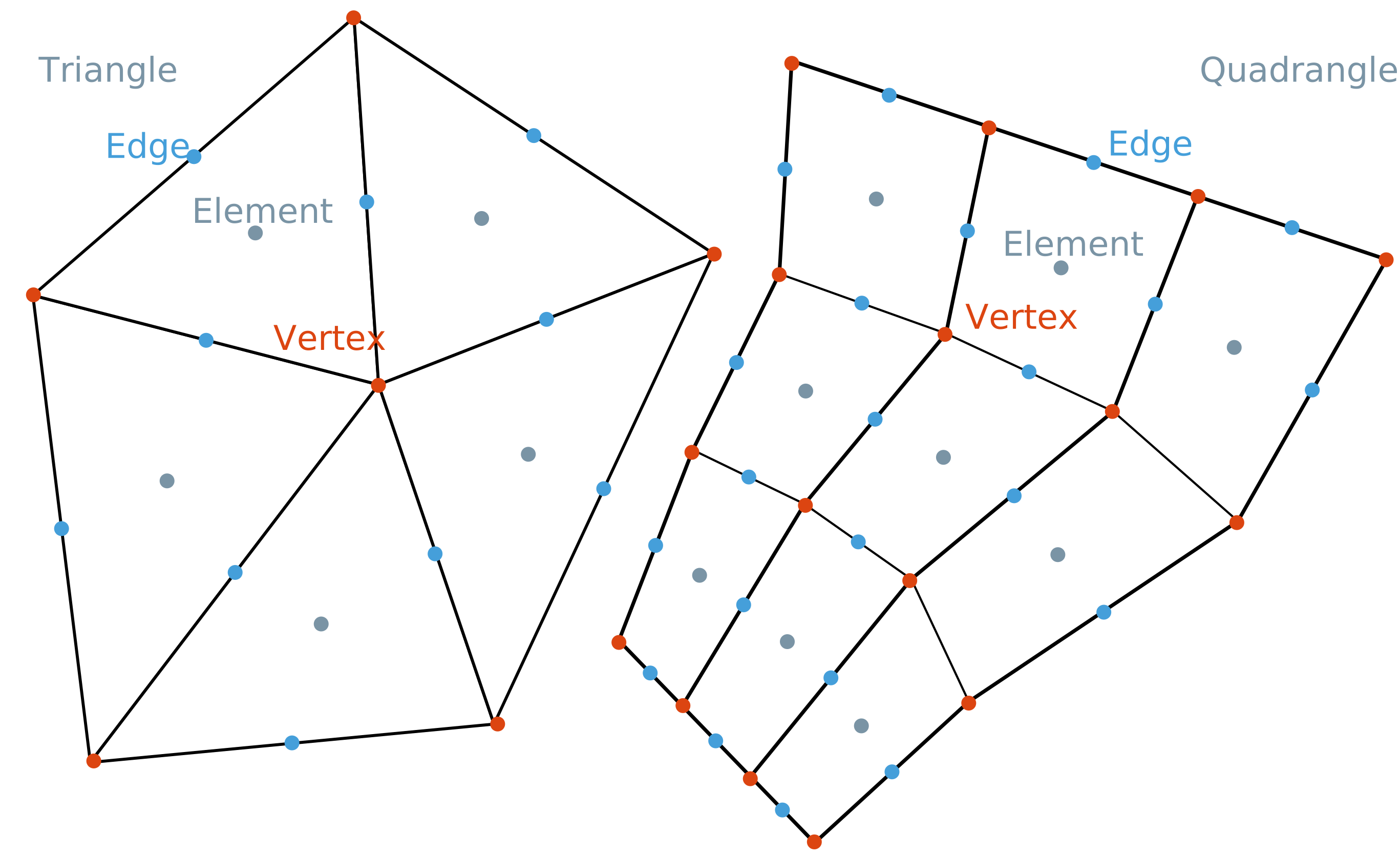
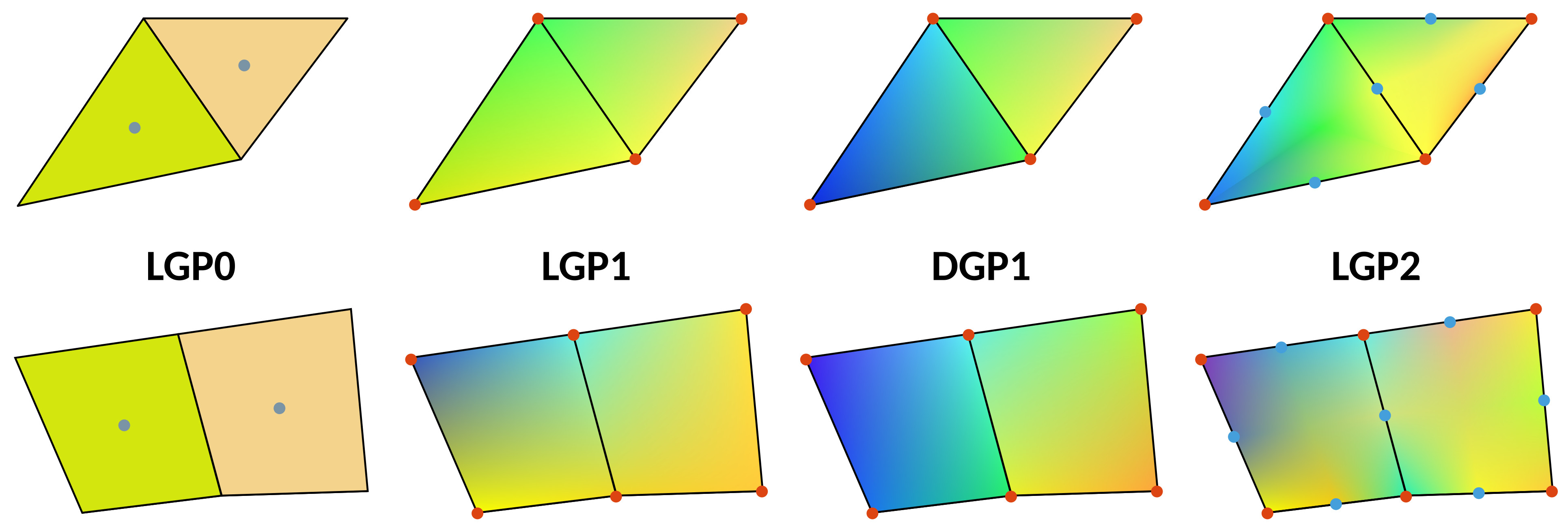
Different discretization can be set for all the state variables. For example, a value can be uniformy assign to an element (triangle or quandrangle), at each vertex, at each edges, or both or them. Additionnaly, the values at the edges and vertex can be shared to all element connected to it (linear) or different (discontinuity).
The recommanded settings for the different state variables are the one folllowing:
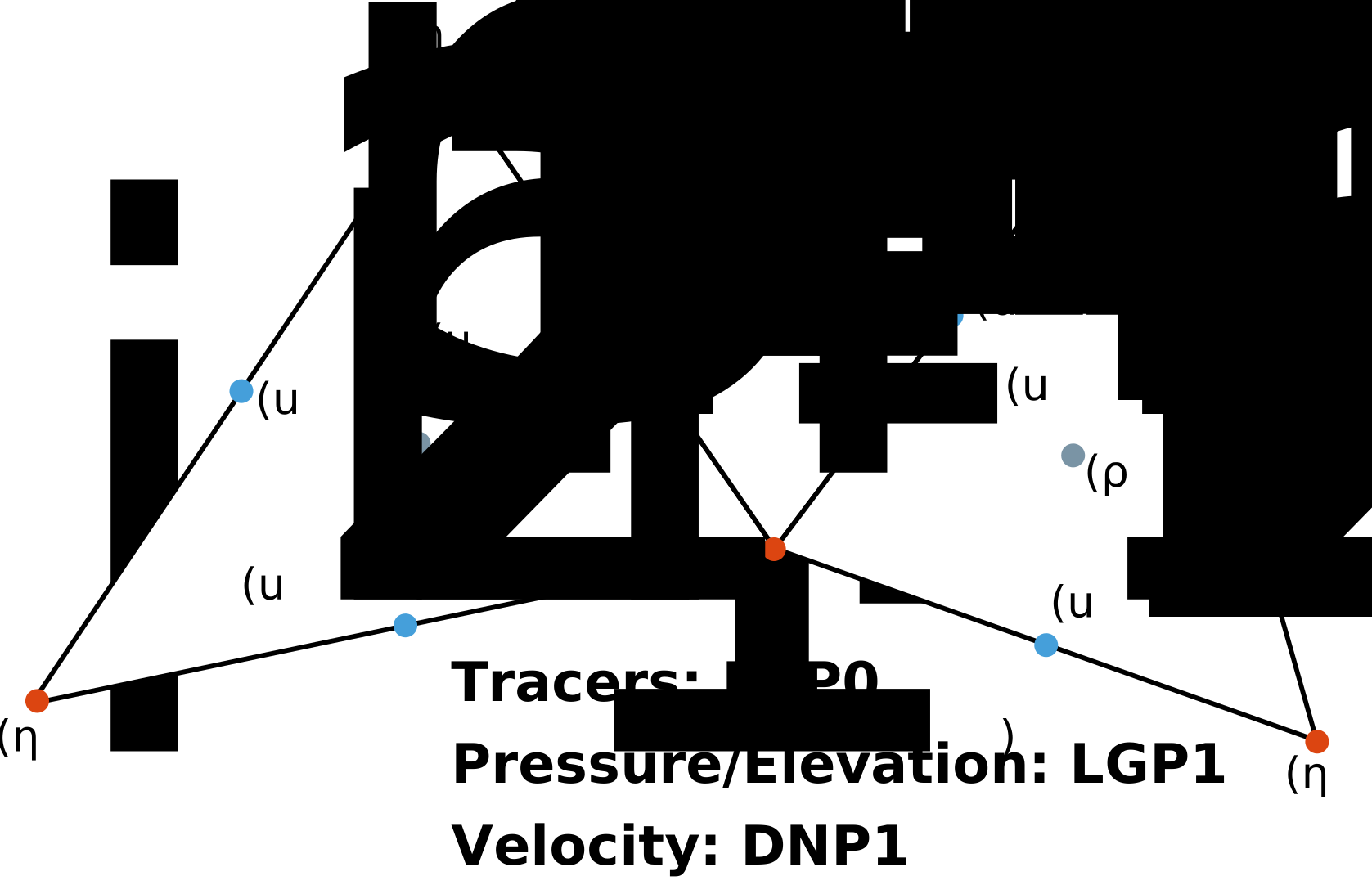
Otherwise, here is the list of the discretisation supported :
Name |
Description |
Illustration |
|---|---|---|
LGP0 |
Unifom on element |
|
LGP1 |
Linear on element vertices |
|
LGP2 |
Linear on element edges and vertices |
|
NCP1 |
Linear on element edges |
|
DGP1 |
Discontinous on element vertices |
|
DNP1 |
Discontinous on element edges |
|
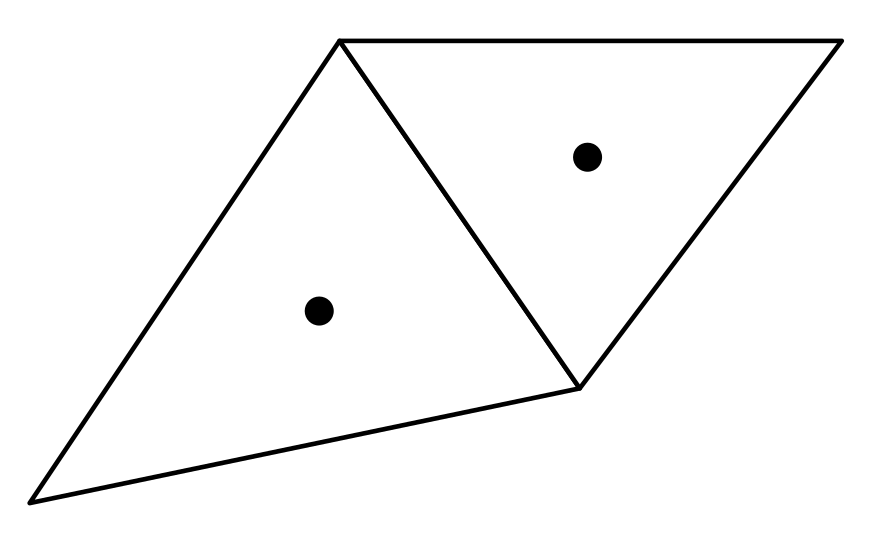
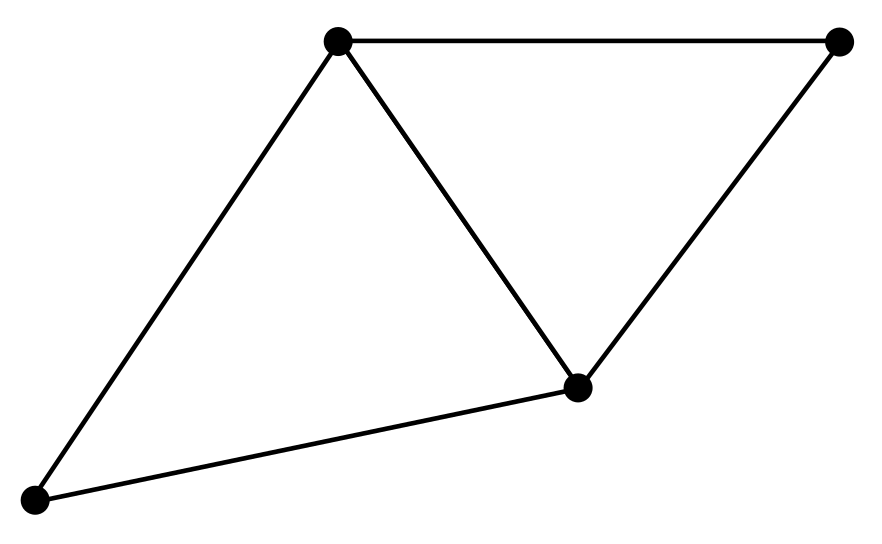
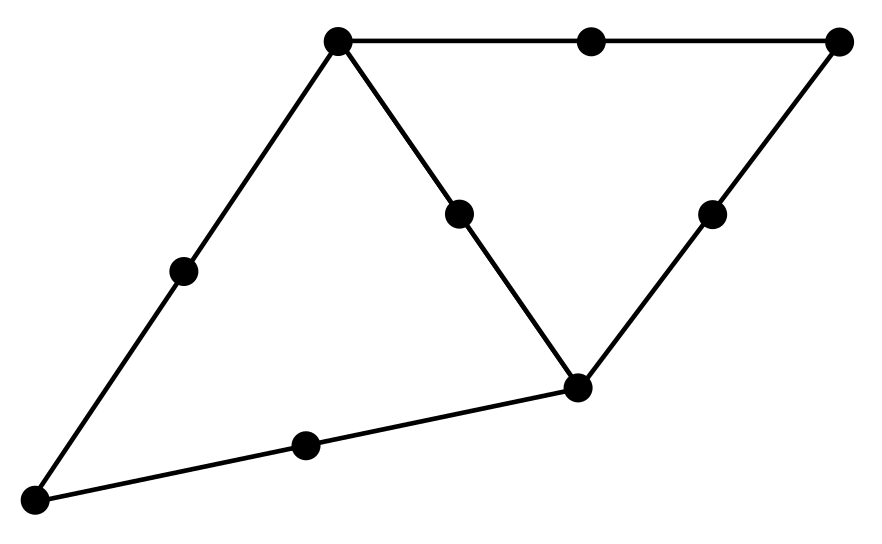
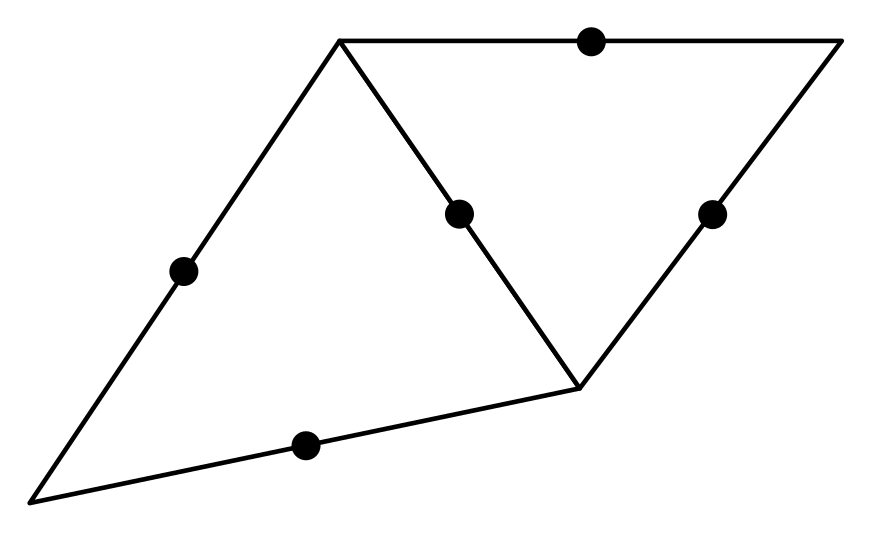
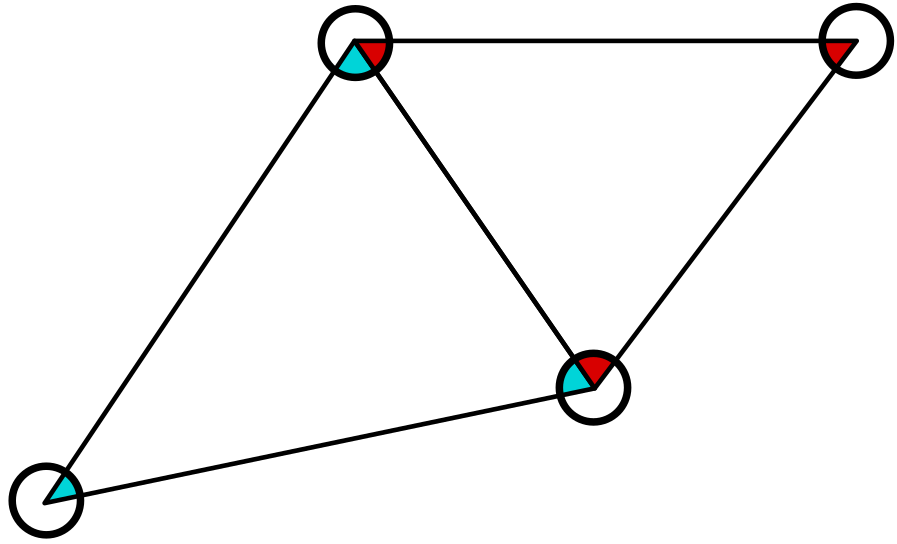
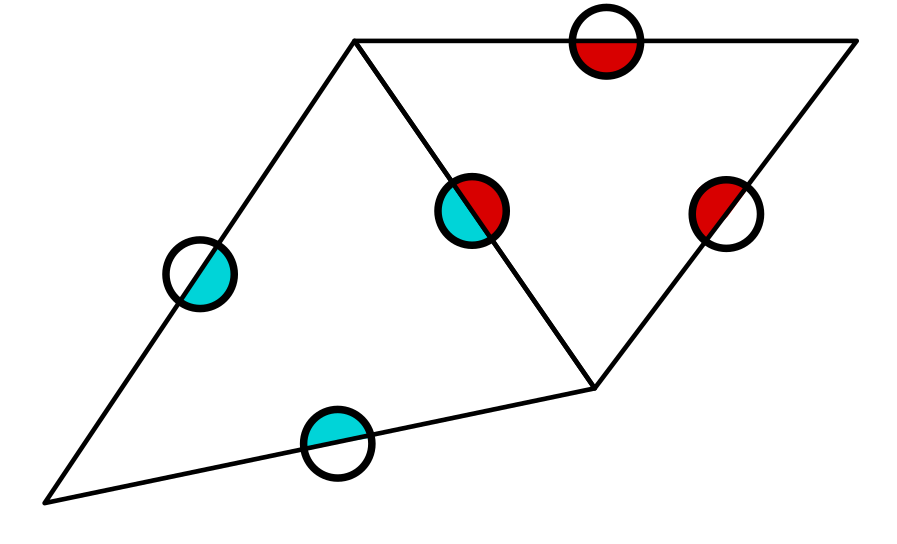
For more example, here
Vertical discretization
Vertically, T-UGOm reproduce the horizontal discretization on multiple levels.
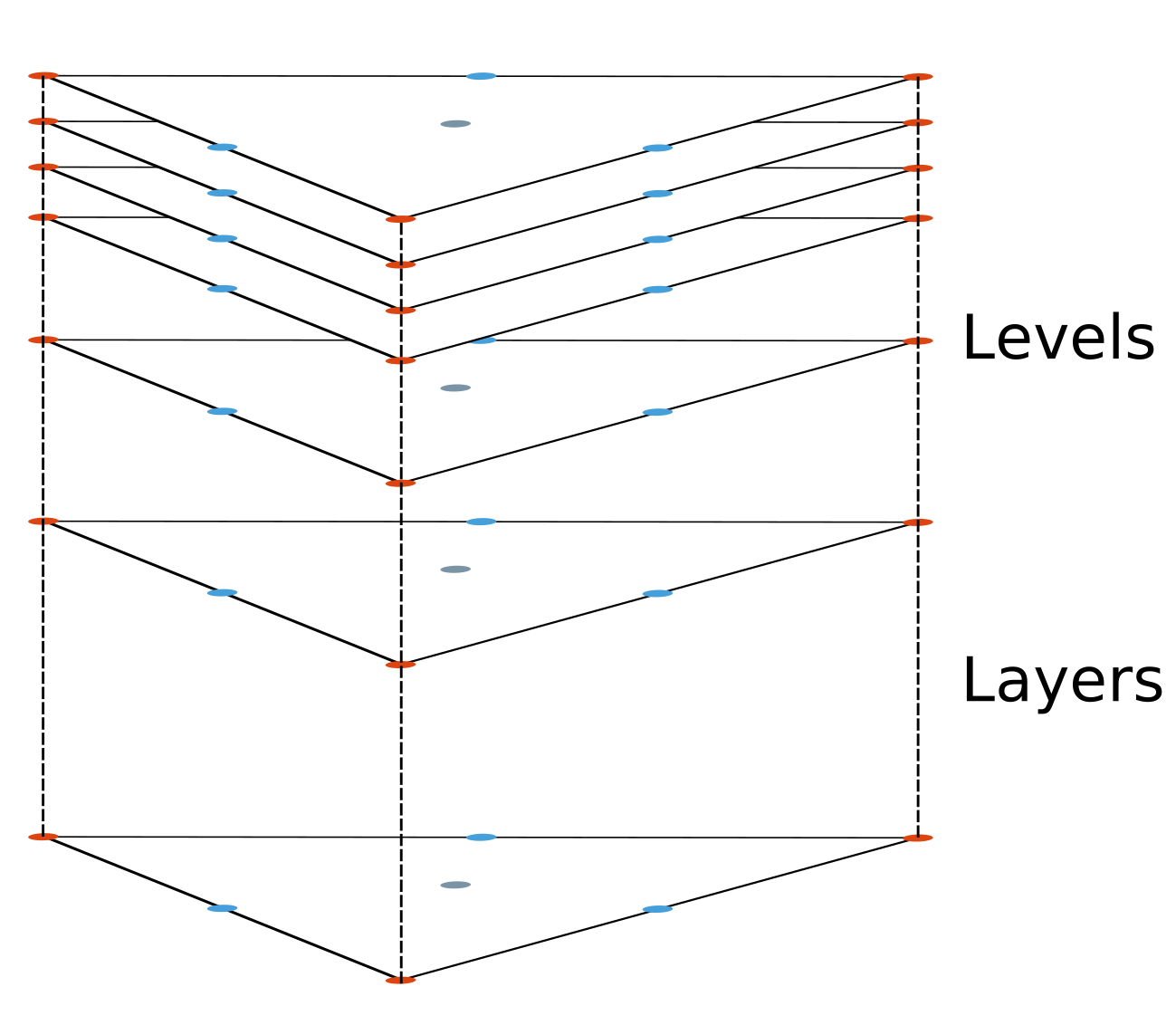
The nature of the levels can be set to:
\(z\) levels (at constant depths)
\(\sigma\) levels (following the topography)
isopycnal levels (at constant density)
The distribution of the level can be set to:
uniform
surface cosine
surface and bottom cosine
isopycnal
Below, the impact of vertical discretization over S2 internal tides in an academical simulation (Barbot, 2021).
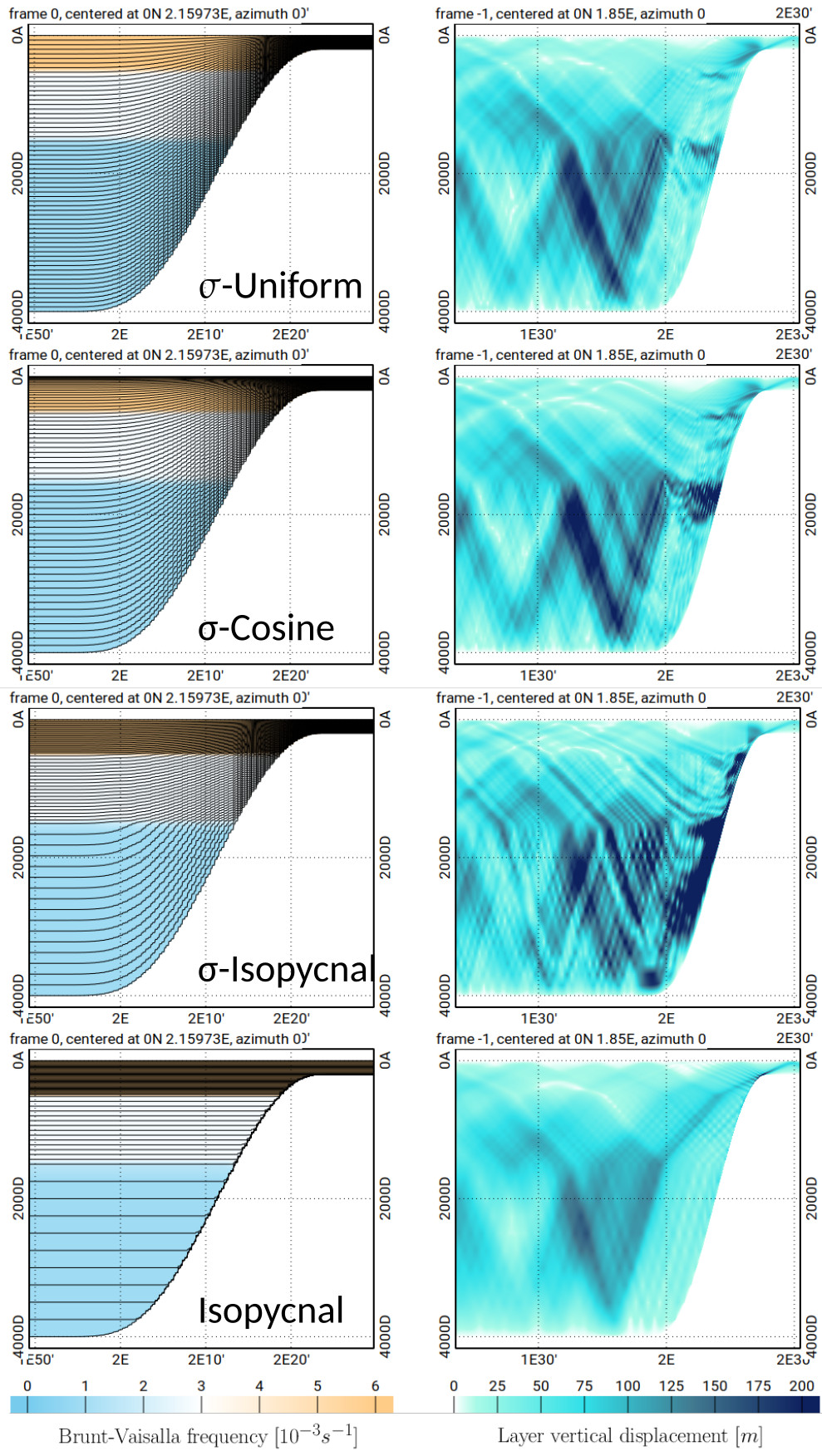 Figure – Comparision between on the vertical displacement (m) of different vercial discretisation for internal tides runs with 3 layer stratification and 60 levels.